

Strengthening Taiwan–Aotearoa Indigenous Partnerships: NDHU Explores Māori Experiences of Sovereignty in Practice
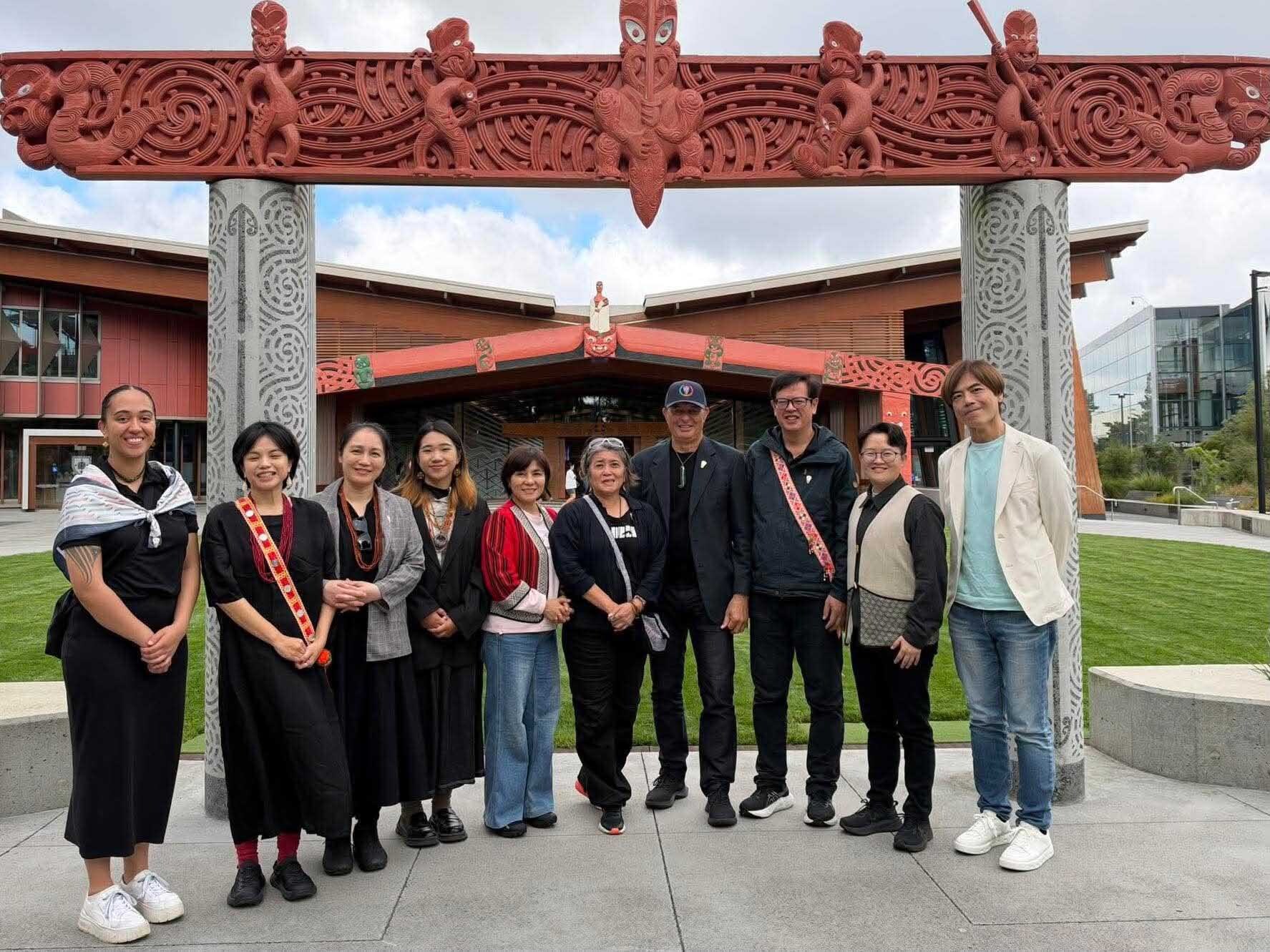
In November 2026, Professor Jolan Hsieh (Bavaragh Dagalomai), Director of the Center for International Indigenous Affairs (CIIA) at National Dong Hwa University (NDHU), led a delegation from Taiwan to Aotearoa New Zealand to participate in the 2026 International Indigenous Research Conference (IIRC 2026).
Alongside presenting research and engaging in international academic dialogue, the delegation visited the University of Waikato, Te Wānanga o Aotearoa, ASB Bank’s Māori Business Centre of Excellence, the Taipei Economic and Cultural Office in Auckland, and Auckland Art Gallery Toi o Tāmaki. These engagements offered valuable opportunities to explore Māori experiences of sovereignty and self-determination across higher education, economic development, international affairs, and the arts.
Deepening Institutional Partnerships: Moving Beyond Memoranda of Understanding
The University of Waikato is one of NDHU’s longstanding academic partners in Aotearoa New Zealand. The two universities have established institutional and faculty-level partnerships, including collaboration between NDHU’s College of Indigenous Studies and Te Pua Wānanga ki te Ao, the University of Waikato’s Faculty of Māori and Indigenous Studies. Professor Awi Mona, Dean of NDHU’s College of Humanities and Social Sciences, has also maintained longstanding academic connections with the university’s law school.
The delegation was welcomed by Dr Sarah-Jane Tiakiwai, Deputy Vice-Chancellor Māori. Discussions focused on strengthening existing partnerships through staff and student mobility, collaborative research, youth empowerment, curriculum development, and Indigenous knowledge practices.
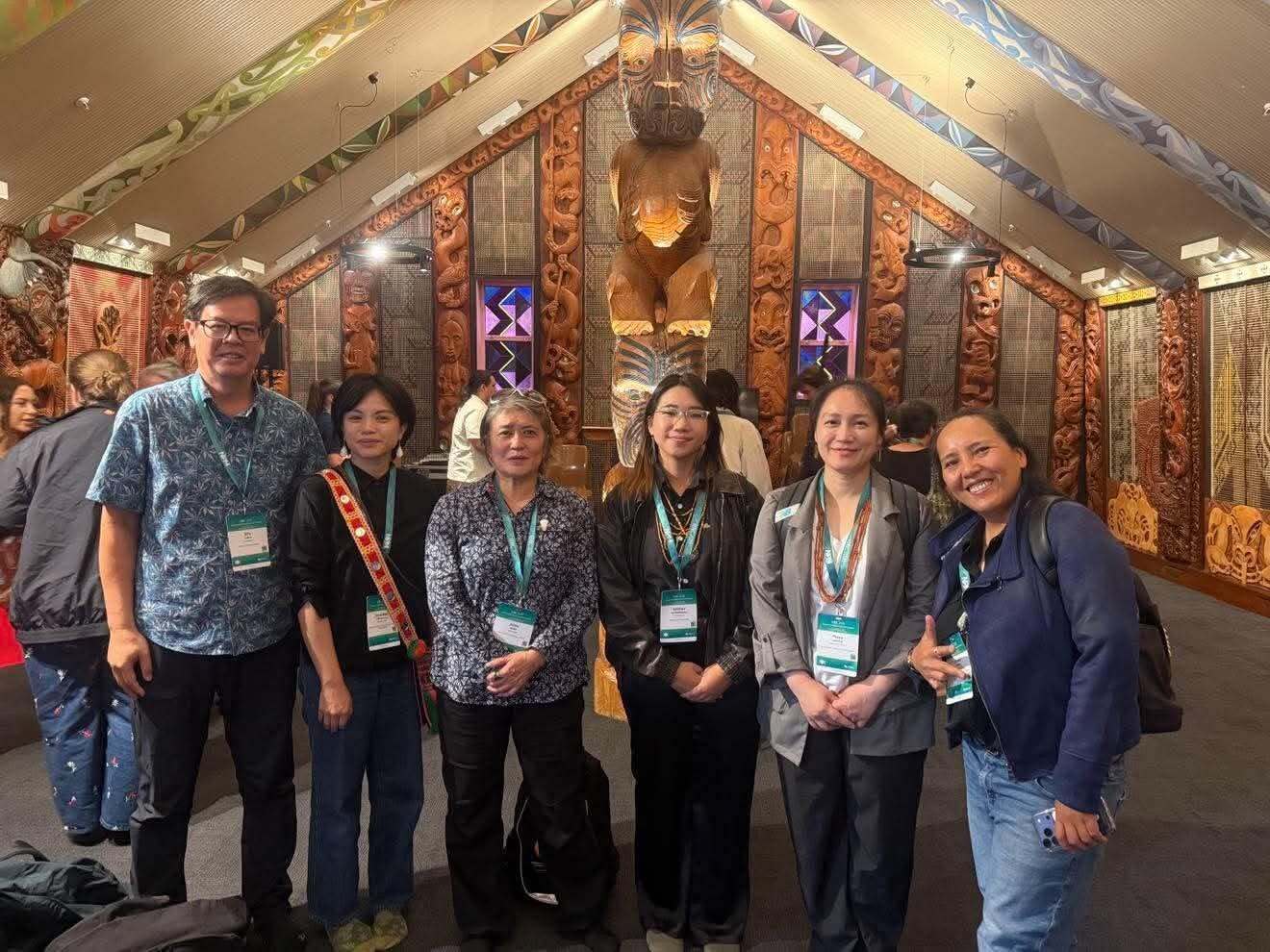
The University of Waikato also arranged a visit to The Pā, a landmark campus development inaugurated in 2023. Grounded in Māori cultural values and local histories, The Pā brings together the university’s wharenui, Ko Te Tangata, student engagement spaces, administrative facilities, and the Faculty of Māori and Indigenous Studies at the heart of the campus.
Beyond its architectural significance, The Pā embeds Māori histories, cultural identities, and relationships with local iwi into everyday university life. It demonstrates how Indigenous cultural values can shape institutional spaces, educational philosophies, and a shared sense of belonging, offering valuable insights for higher education institutions in Taiwan.
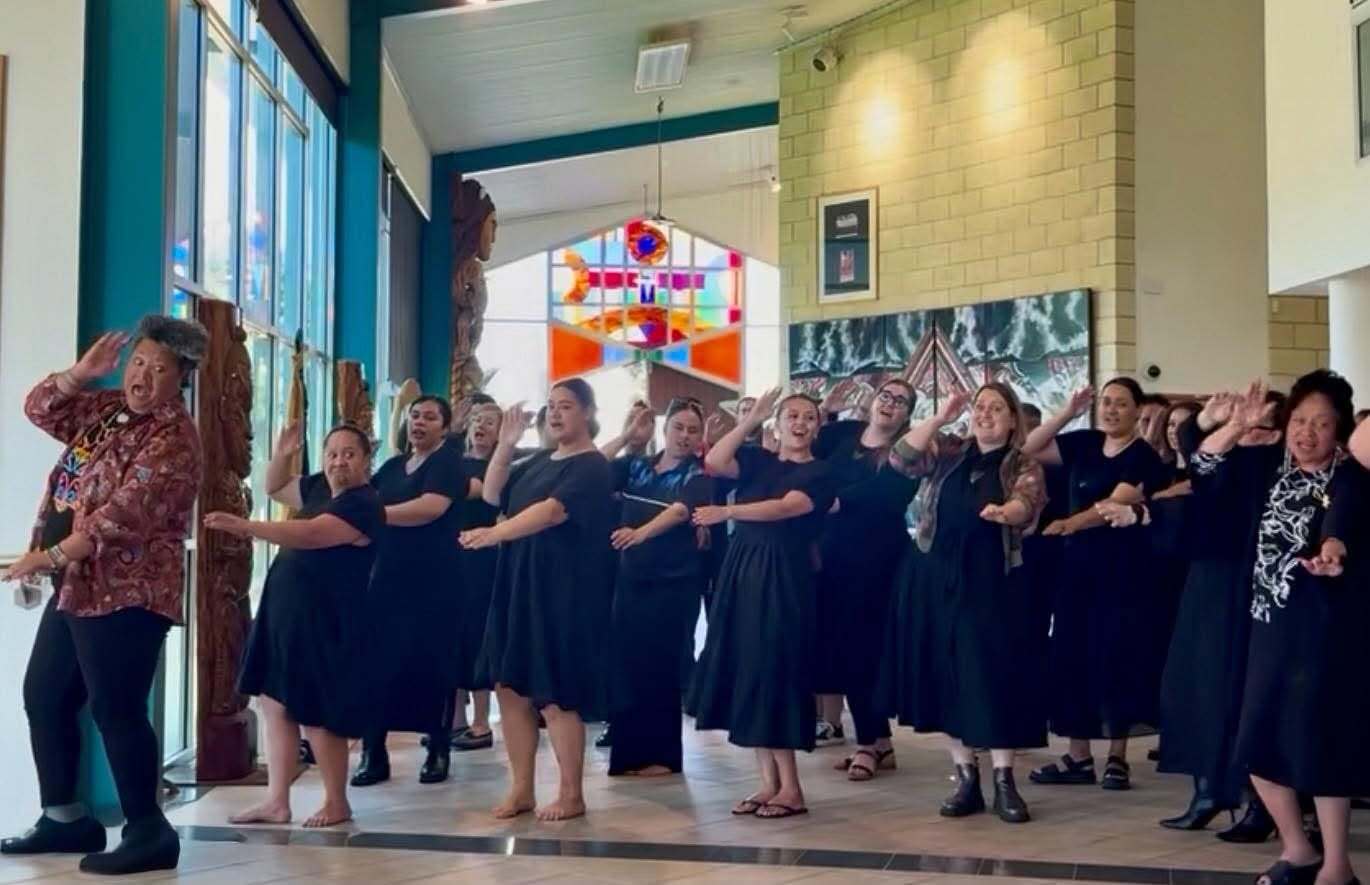
The delegation subsequently visited Te Wānanga o Aotearoa, where it was warmly welcomed through a traditional Māori welcoming ceremony (pōwhiri) by Chief Executive Evie O’Brien (Te Kura Toroa), members of the executive leadership team, and dozens of staff. The visit also provided a meaningful opportunity to reconnect with longstanding colleagues who have contributed to Indigenous education exchanges between Taiwan and Aotearoa.
Since CIIA launched its Taiwan–Aotearoa engagement initiative under Taiwan’s New Southbound Policy in 2017, Professor Hsieh has continued to cultivate partnerships with Indigenous tertiary education institutions across Aotearoa. During this visit, discussions focused on implementing the existing institutional Memorandum of Understanding and exploring opportunities for future collaboration. The delegation also visited a newly opened exhibition showcasing student artworks, gaining insights into the importance of integrating Indigenous arts and cultural practices into campus life and learning environments.
The University of Waikato, a public comprehensive university, and Te Wānanga o Aotearoa, a tertiary education institution grounded in Māori knowledge systems and cultural values, illustrate different institutional approaches to advancing Indigenous educational sovereignty.
During discussions at both institutions, Professor Hsieh emphasised that memoranda of understanding represent only a starting point. For Indigenous Peoples, meaningful partnerships depend on sustained engagement, reciprocal learning, and ensuring that educational and research outcomes benefit Indigenous communities.
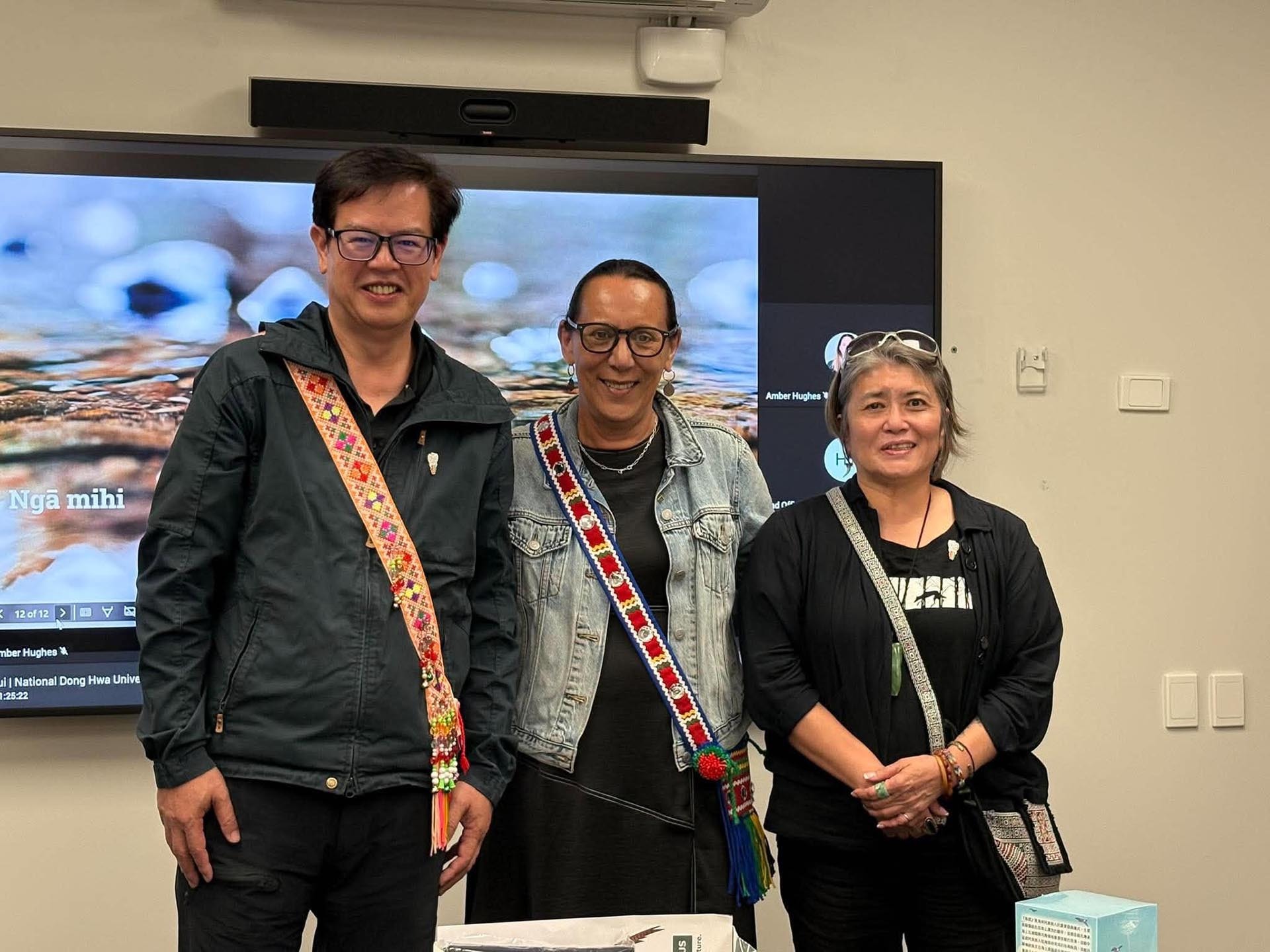
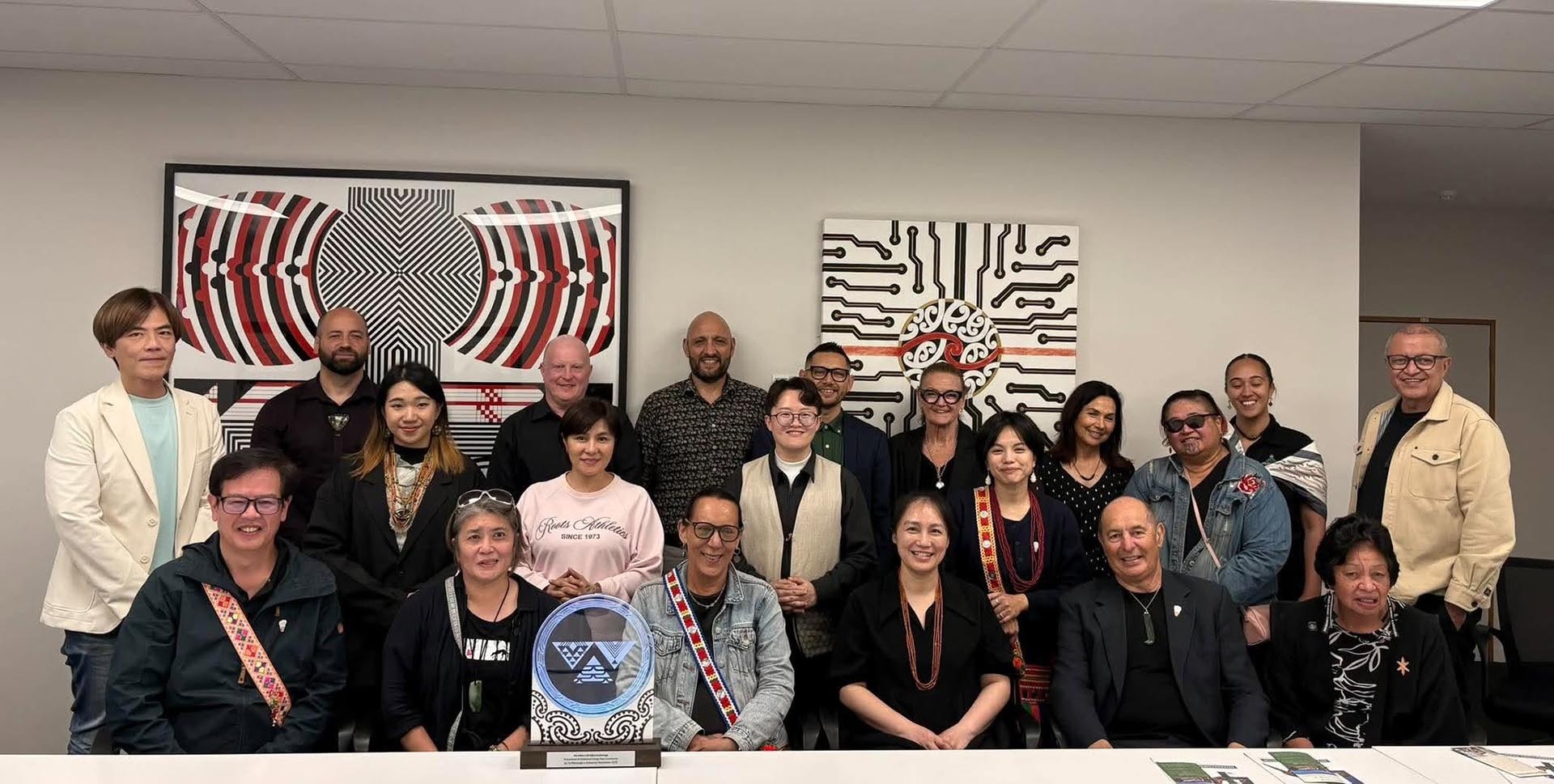
Exploring the Māori Economy: From Collective Rights to Economic Self-Determination
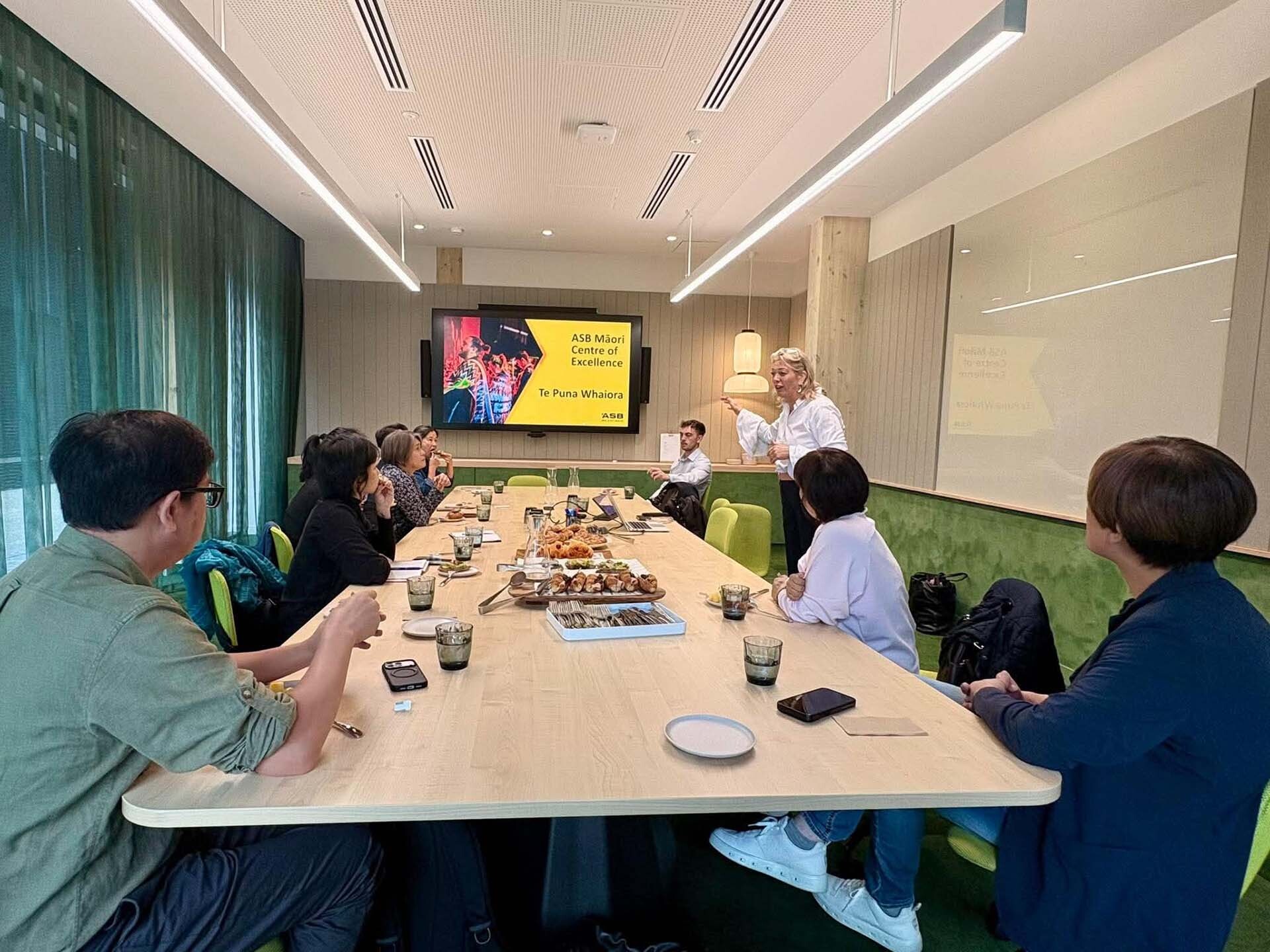
The delegation also visited ASB Bank’s Māori Business Centre of Excellence, where it was hosted by Tina Wilson, former New Zealand Trade Commissioner in Taiwan and current General Manager of the Centre.
Wilson introduced the development, diversification, and future prospects of Te Ōhanga Māori — the Māori economy.
According to the Māori economy report released in 2025, the Māori asset base reached NZ$126 billion in 2023, contributing NZ$32 billion, approximately 9 percent of New Zealand’s GDP. The Māori economy has expanded beyond agriculture, forestry, and fisheries into professional services, technology, and financial investment.
Of particular significance is the way Māori economic development connects collective asset governance, the restoration of land and resource rights, and culturally grounded business practices with community wellbeing, intergenerational responsibility, and self-determination.
These experiences offer valuable perspectives for advancing Indigenous economic sovereignty and transitional justice in Taiwan.
Strengthening Taiwan–Aotearoa Relations: Indigenous Diplomacy and Cultural Self-Determination
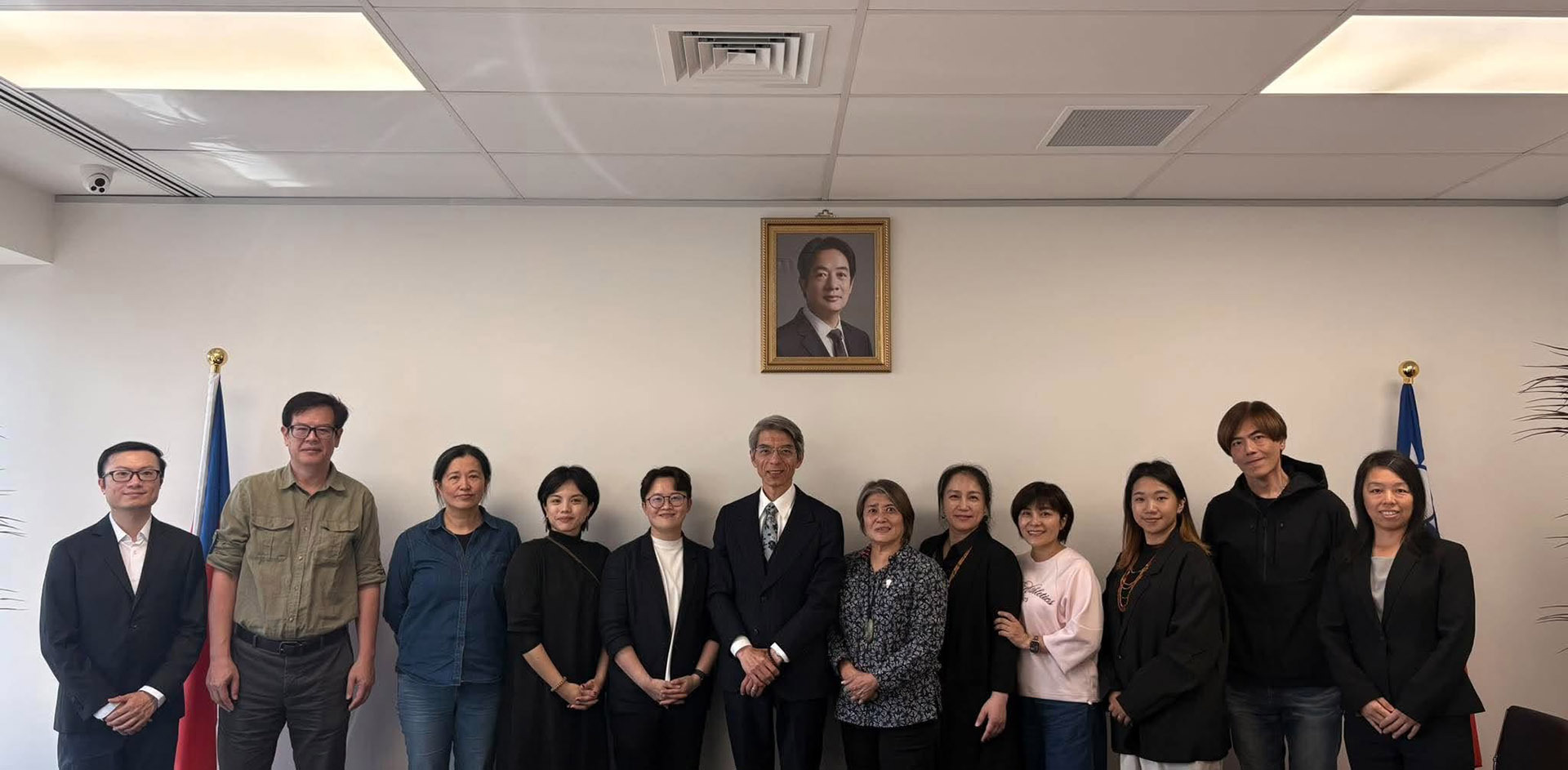
At the invitation of Director-General Kevin Lin ( 林晨富) the delegation visited the Taipei Economic and Cultural Office in Auckland to discuss opportunities for strengthening Taiwan–Aotearoa relations through Indigenous-led cooperation in education, culture, economic development, and public policy. The Indigenous Peoples of Taiwan and Māori share deep Austronesian historical and cultural connections, while the Indigenous cooperation chapter of the 2013 Taiwan–New Zealand Economic Cooperation Agreement (ANZTEC) provides an institutional foundation for continued engagement. Indigenous Peoples are not merely cultural representatives in conventional diplomacy, but active agents in shaping international relationships and advancing cross-border cooperation.
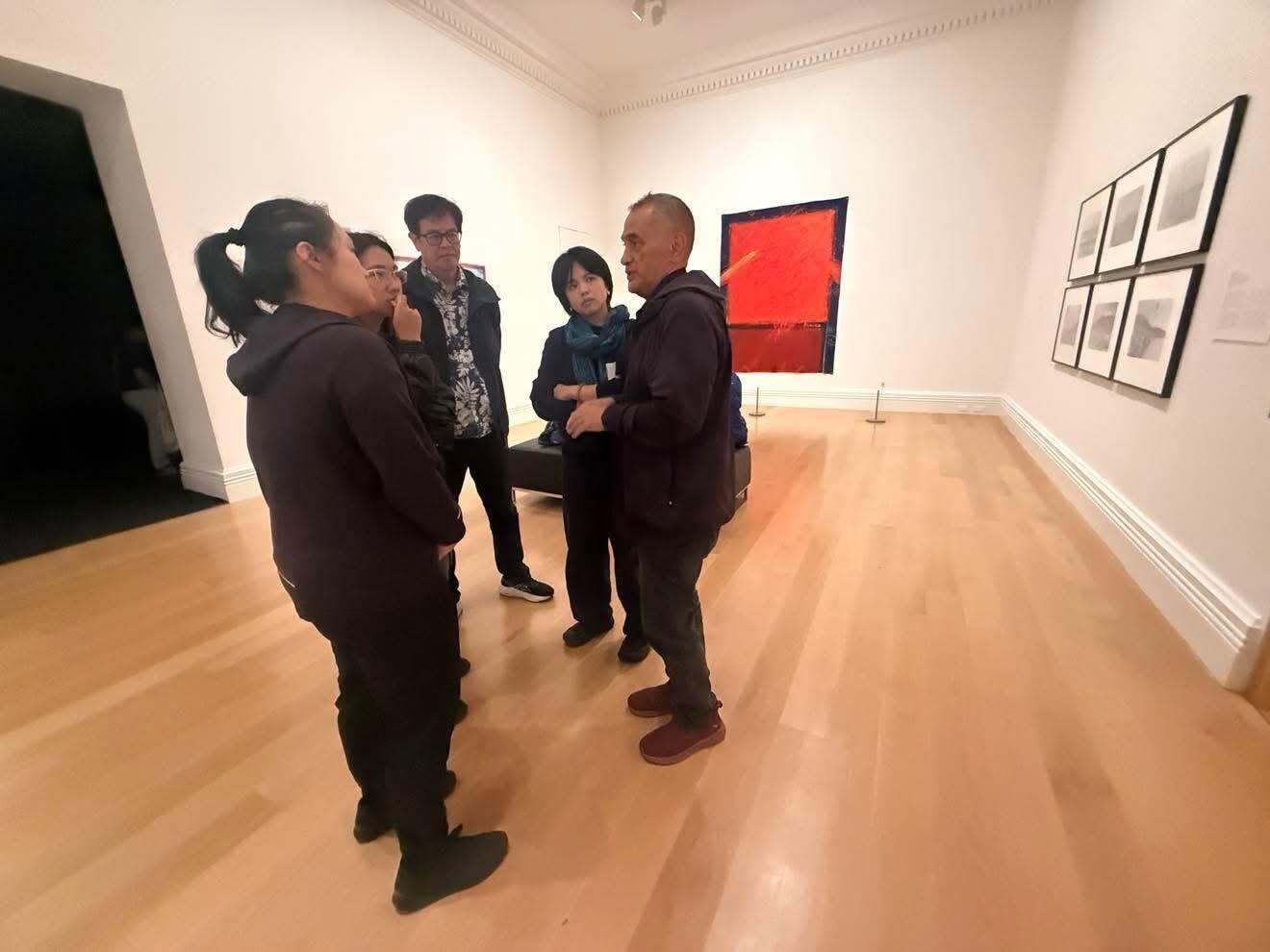
The delegation also visited Auckland Art Gallery Toi o Tāmaki. Through exhibitions such as Ngā Taonga Tūturu: Treasured Māori Portraits and Taimoana | Coastlines: Art in Aotearoa, the delegation explored how art preserves historical memory and engages with colonial histories, relationships with land, cultural identities, and Indigenous political resistance. From Indigenous diplomacy to self-representation in public cultural institutions, these experiences highlight the importance of Indigenous Peoples’ authority over their own narratives, cultural self-determination, and meaningful participation in public affairs. They also resonate with CIIA’s longstanding commitment to advancing Indigenous knowledge sovereignty and transitional justice.
Empowering the Next Generation through Meaningful International Participation
Youth empowerment was a central dimension of this international engagement. Through active participation in international conferences, research presentations, institutional visits, and cross-cultural dialogue, emerging Indigenous researchers gained practical experience, developed professional networks, and explored the challenges and possibilities facing Indigenous Peoples in different historical and political contexts.
Professor Hsieh emphasised that Indigenous youth empowerment must extend beyond classroom learning. Young people need meaningful opportunities to participate, build relationships, and contribute to international dialogue while remaining grounded in their own cultures, knowledge systems, and responsibilities to their communities.
Indigenous youth are not merely participants in international exchanges. They are knowledge producers, relationship builders, and future leaders in Indigenous international affairs.
Creating opportunities for experiential learning, international participation, and community engagement is central to CIIA’s long-term commitment to nurturing a new generation of Indigenous leaders with a strong sense of cultural identity, international agency, and community accountability.
Sustaining Long-Term Indigenous Partnerships
The visit provided opportunities for researchers from Taiwan to share their work internationally while strengthening higher education partnerships, learning from Māori economic development, and advancing Taiwan–Aotearoa relations through Indigenous-led engagement.
At the closing ceremony of the 2026 International Indigenous Research Conference, Assistant Professor Sifo Lakaw, representing the Taiwan delegation, expressed gratitude to the Māori hosts in both Pangcah (Amis) and English. He encouraged Indigenous Peoples worldwide to take pride in their languages, cultures, and ancestral wisdom, confidently embrace who they are, and continue to support and uplift one another as they collectively navigate the challenges posed by dominant societies.
Professor Hsieh extends her sincere appreciation to longstanding Māori friends and partners Te Ururoa Flavell, Tina Wilson, Brian Morris, and Peter Mataira, as well as colleagues at the University of Waikato, Te Wānanga o Aotearoa, and Auckland University of Technology (AUT), for their generous assistance with programme coordination, transportation, hosting, and accompanying the delegation. She also gratefully acknowledges the support of the Taipei Economic and Cultural Office in Auckland, as well as the financial and personnel support provided by the Council of Indigenous Peoples and the Taiwan Foundation for Democracy.
Meaningful Indigenous international engagement is built upon relationships cultivated over time, mutual respect, trust, and shared commitments. CIIA remains dedicated to advancing reciprocal knowledge exchange, youth empowerment, and community-based collaboration, supporting the Indigenous Peoples of Taiwan and Māori in their shared pursuit of self-determination.