

Flying the Flag of the SDGs, NDHU Sets Sail Toward a Sustainable Future

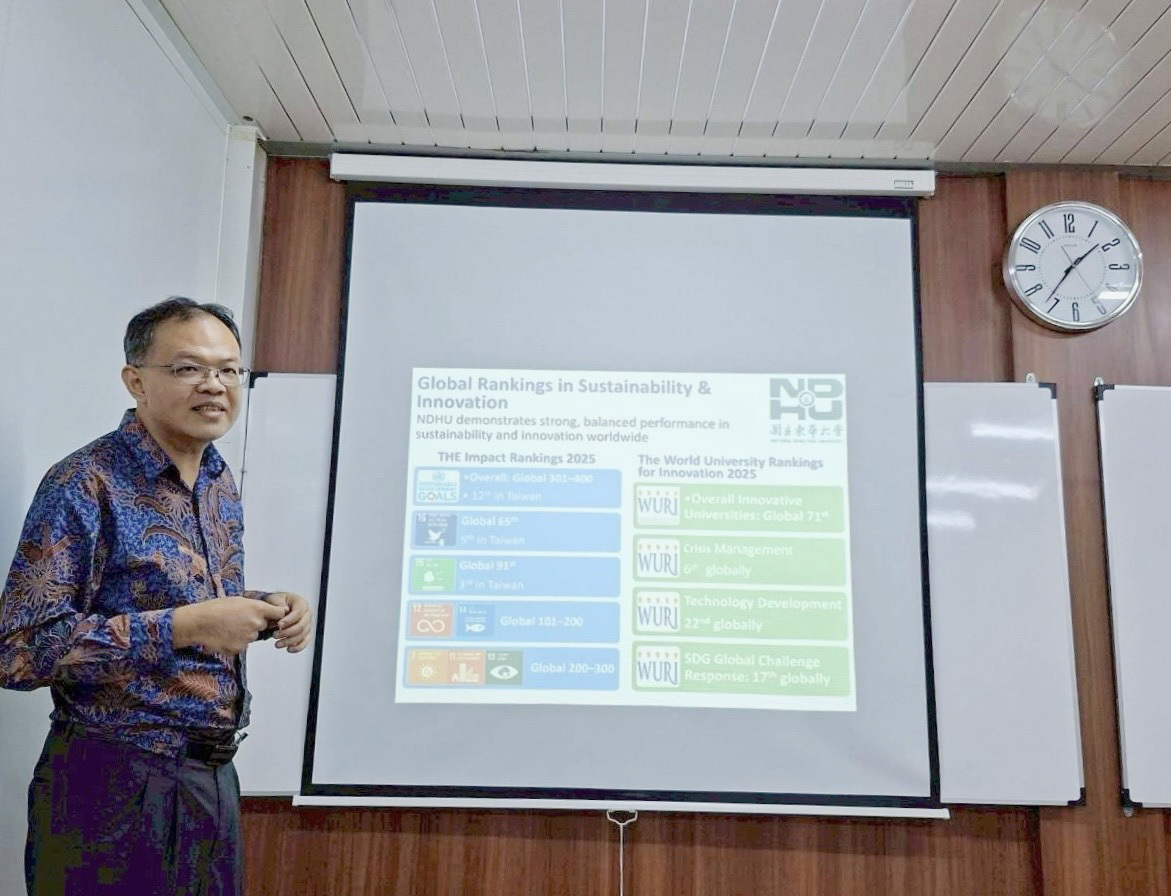
National Dong Hwa University (NDHU)’s commitment to sustainable development continues to earn strong recognition both at home and abroad. In the THE Impact Rankings, NDHU placed within the global top 100 for SDG 15 (Life on Land) and SDG 16 (Peace, Justice, and Strong Institutions). The University was once again honored as a Model University in the 2025 Taiwan Sustainable University Awards and received a Gold Award for its Sustainability Report. President Hui-Mi Hsu was selected as one of Taiwan’s three Outstanding Sustainability Leaders.
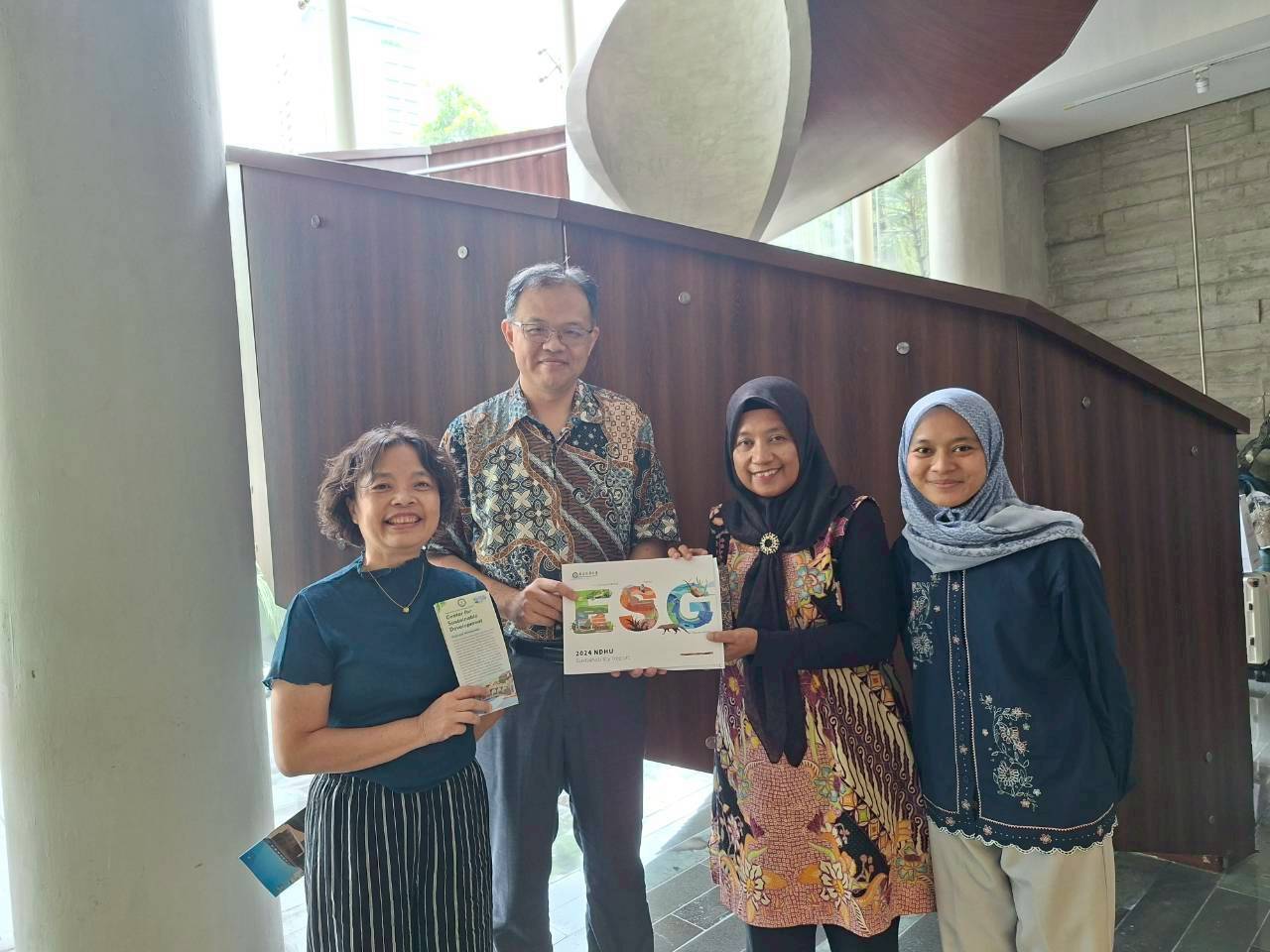
Responding to warm invitations from two Indonesian universities—Universitas Pertamina (UP) and Universitas Kristen Indonesia (UKI)—a delegation led by Chief Sustainability Officer Prof. Chun-Hung Lee visited Jakarta to advance academic exchange and practical collaboration aligned with the spirit of the United Nations Sustainable Development Goals (SDGs), further expanding NDHU’s international partnerships.
At UP and UKI, the delegation engaged vice presidents, deans, department chairs, and sustainability teams in in-depth discussions on collaborative research and practical initiatives centered on the SDGs. The universities explored joint efforts to address regional sustainability challenges, including affordable and clean energy, sustainable cities, climate action, and responsible consumption and production. Both institutions expressed great interest in co-developing research projects on energy transition, smart city development, and environmental monitoring.
NDHU and UP have built multiple exchanges and collaborations over the years. UP’s strengths in energy and engineering innovation provide valuable opportunities to study Indonesia’s fast-changing energy landscape. Both sides agreed to continue joint research, co-supervise graduate students, and establish an SDG Innovation Center as a platform for interdisciplinary projects, enabling students and researchers to directly engage with real-world SDG challenges. UP is planning to bring master’s students to Taiwan for an SDG workshop and field visits showcasing Taiwan’s sustainability practices.
Discussions with UKI focused on community resilience, educational innovation, social welfare, and public health—areas closely connected to SDGs such as good health and well-being, quality education, and reduced inequalities. UKI faculty members shared ongoing community outreach programs and expressed strong interest in NDHU’s strengths in Indigenous studies, environmental sciences, and social innovation. Both sides explored the possibility of launching joint field research in rural and Indigenous communities.

In addition to visiting UP and UKI, the NDHU delegation also developed a new cooperation blueprint with the delegation from Universitas Negeri Surabaya (UNESA) in Surabaya. The universities will promote joint research, academic exchange, and community-based projects, with a focus on key SDG areas such as quality education, climate action, and sustainable cities. They have agreed to invite NDHU faculty to offer research workshops at UNESA in 2026, advancing SDG-focused innovation.
Prof. Chun-Hung Lee was also invited to serve as keynote speaker at the Accounting Research Festival, themed “Redefining Accounting Education: Balancing Technological Innovation with Ethics and Sustainability.” After the event, he met with scholars to discuss future inter-university collaboration.
Prof. Lee emphasized that Indonesia’s diverse social and environmental contexts offer fertile ground for interdisciplinary research, aligning closely with NDHU’s mission and goals for global engagement. He stated that NDHU is committed to building long-term, mutually beneficial partnerships that expand research impact while providing faculty and students with broader international experiences.
President Hui-Mi Hsu, recently honored as an Outstanding Sustainability Leader, expressed his appreciation for the delegation’s efforts to strengthen transnational partnerships. He remarked that such collaborations not only deepen academic exchange but also contribute to real-world solutions to global challenges. Sustainable development requires cooperation across borders, disciplines, and communities, and NDHU will continue to advance its shared commitment to the SDGs. The University will also continue promoting the Regional Transportation Development Research Center’s service-upgrade initiatives, strengthening inter-ministerial cooperation, integrating diverse resources, improving public transportation services, and helping realize a sustainable future for eastern Taiwan.